UDL and Tech
For my reflection this week, I wanted to think about the different ways UDL has been approached since the use of tech became more prevalent in schools. The UDL principles, which are outlined below, include providing multiple means of engagement, representation, and expression.
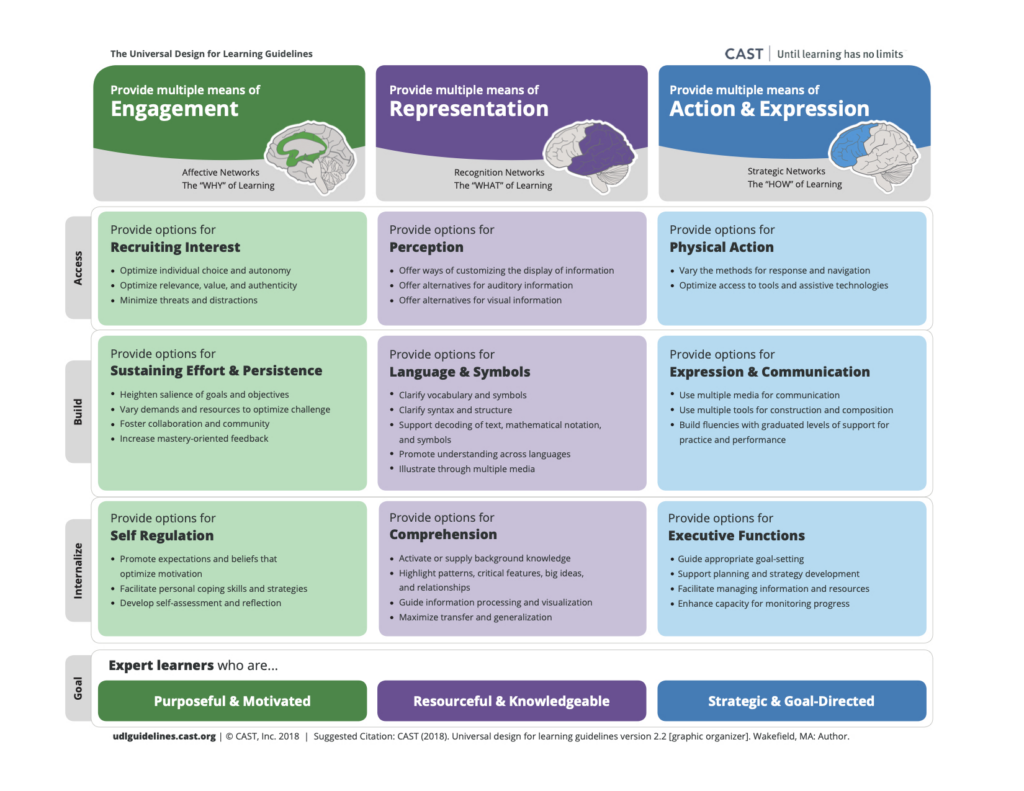
So how does tech contribute to this? Technology has allowed students to access resources that would not have been able to previously, such as audiobooks or using text to speech software to understand a worksheet or information. Having the ability to translate texts allows for students who do not have English as their first language to be able to engage in the content and feel as though they are not lost or falling behind. In my critique and revision assignment this week, one of the UDL suggestions that AI gave me was to allow students to create a poem using emojis for their first draft so they could figure out what they wanted to express. They could then take those emojis and turn it into a word poem afterwards.
One of the biggest ways I’ve noticed tech contribute to UDL is in the output and expression of student work. Students are able to use speech to text, create podcasts instead of essays, or use canva to design a collage that expresses their ideas. Students are also able to record a presentation and submit it to the teacher instead of standing in front of their peers, which allows them to perform to the best of their abilities and feel confident when presenting. Thinking back to when I was in school, adaptations like this would have been very helpful in allowing me to feel more confident and secure when creating a project or presentation.
Emma, thanks for the overview and your thoughts about tech and UDL. As mentioned, another good template or model is Bloom’s. I am curious to see how a GenAI might interpret the mix of the four models!